
By Nick McCracken, Principal, Demark Studio
Value engineering is a familiar part of the development process. A project comes in over budget, the team identifies opportunities to reduce costs, and design elements are modified or eliminated to bring the numbers back in line.
But there's a fundamental problem with this approach: reducing construction costs doesn't necessarily improve a project's financial performance.
In fact, some of the most expensive decisions a developer can make are the ones that appear to save money.
True value engineering requires looking beyond the construction budget to understand how design decisions affect the entire project. Integrating development strategy into the design process means evaluating decisions against initial capital investment, long-term operational performance, and return on investment.
The Difference Between Cost and Value
In a conventional value engineering exercise, individual building components are often evaluated primarily by their price tags. Can we substitute a less expensive material? Eliminate a structural element? Reduce square footage?
These are reasonable questions, but they don't tell the whole story.
A less expensive material may require more installation labor. Eliminating a building element might trigger costly redesign work. Reducing square footage could compromise revenue-generating space or make a building less operationally efficient.
The question shouldn't simply be, "How much can we save?"
It should be, "What are we giving up in exchange for those savings?"
How a One-Time $50,000 Savings Could Cost $250,000 a Year
On a restaurant project in California, our team identified an opportunity to add a mezzanine above the kitchen, increasing usable space from 3,000 to 4,500 square feet. Because of the building's fire-rating requirements, the kitchen already needed a structural ceiling capable of supporting the same live loads as a mezzanine. That meant we could add 1,500 square feet with relatively little additional construction.
During value engineering, the client elected to eliminate the mezzanine, estimated at $250,000. But because the underlying structure was still required, removing it saved only $70,000 in construction costs. After additional structural, MEP, architectural, and plan review expenses, the net savings were approximately $50,000.
In exchange, the project lost 1,500 square feet of potential usable space and 25% of its planned seating capacity.
Consider the financial implications. Just eight additional tables, averaging 1.5 seatings per night at $80 per table, could generate $960 in nightly revenue, or nearly $250,000 annually operating five nights a week.
At an illustrative 20% incremental contribution margin, that additional revenue could recover the $50,000 in foregone savings in approximately one year, with continued revenue potential thereafter.
A one-time $50,000 savings came at the expense of a substantially greater long-term revenue opportunity. That's the difference between cutting costs and creating value.
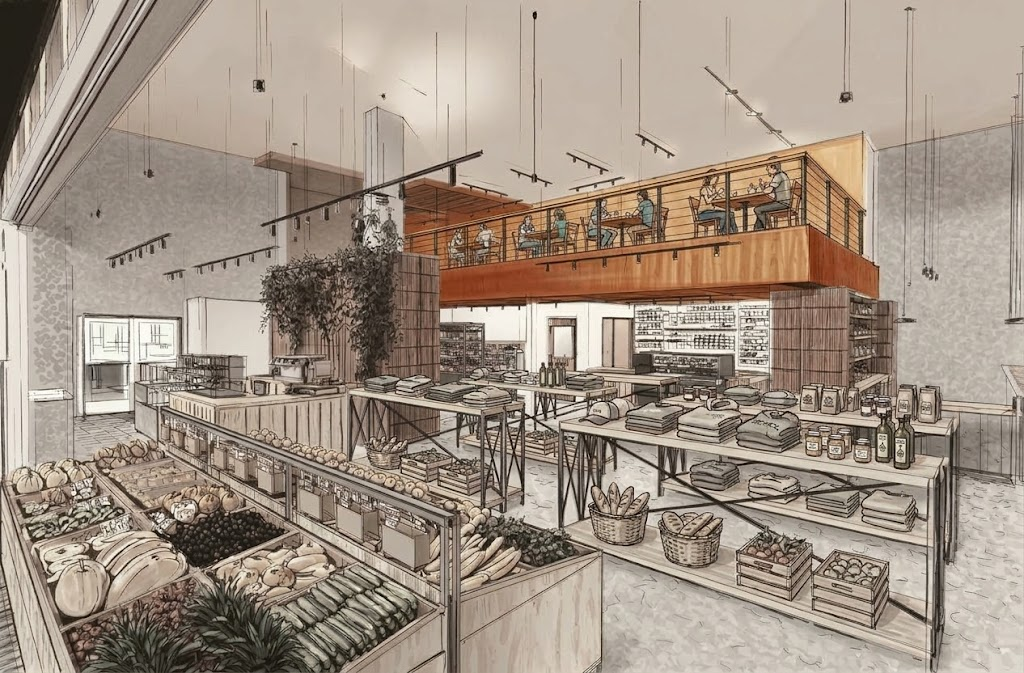
Rendering of the proposed mezzanine, which would have added 1,500 square feet of usable space with minimal additional structural investment.
The Biggest Opportunities Happen Early
One of the challenges with conventional value engineering is its timing. Too often, cost-reduction conversations happen after major design decisions have been made, drawings have been developed, and consultants have coordinated their work.
At that point, changes can trigger costly redesigns, permitting revisions, and construction delays. For revenue-generating developments, those delays can also mean lost income alongside ongoing financing and carrying costs.
A more effective approach integrates cost, constructability, and operational considerations from the beginning. By establishing clear priorities and involving contractors and specialized consultants early, teams can identify opportunities that improve both project economics and design.
For a hospitality project, that might mean optimizing kitchen size and seating capacity to maximize revenue, bringing operational considerations into the hospitality design process from the outset.
For a multifamily development, it could mean evaluating structural efficiencies, unit layouts, and code requirements before committing to a building configuration. On complex mixed-use developments such as Block 7, these considerations extend beyond individual buildings to the relationship between housing, commercial space, infrastructure, and the surrounding community.
In residential design, simplifying structural spans or aligning plumbing between floors can reduce construction complexity without compromising quality.
These decisions create far more value when they shape the design from the beginning rather than serve as corrective measures at the end.
Designing Around the Right Priorities
Every development has different financial objectives.
A developer planning to sell a property upon completion may prioritize different investments than an owner intending to operate it for decades. A restaurant operator might measure success partly through revenue per seat, while a residential developer may focus on unit efficiency, durability, and long-term maintenance.
There isn't one universal formula for value engineering.
What's essential is establishing a clear understanding of what creates value for a particular project, then using those priorities to guide decisions throughout design and construction.
Sometimes the right solution is to simplify a material palette. Sometimes it's to eliminate an entire construction trade. And sometimes, as with the restaurant mezzanine, spending slightly more upfront can create considerably more long-term value.
The best solutions often achieve several objectives at once: reducing costs, improving construction efficiency, strengthening the architectural concept, and enhancing building performance.
A Better Measure of Success
Budget discipline is essential to successful development. But the lowest construction cost shouldn't be confused with the best financial outcome.
When value engineering is treated as a collaborative, ongoing design process, it becomes an opportunity to make a project more efficient, more financially productive, and often more architecturally compelling.
The objective isn't to build the cheapest version of a project. It's to create the most value from the resources available.
And that distinction can fundamentally change the decisions we make along the way.
——————
Planning a Development Project?
Demark Studio works with developers to navigate feasibility, design, and construction challenges, turning project constraints into opportunities for long-term value.
